

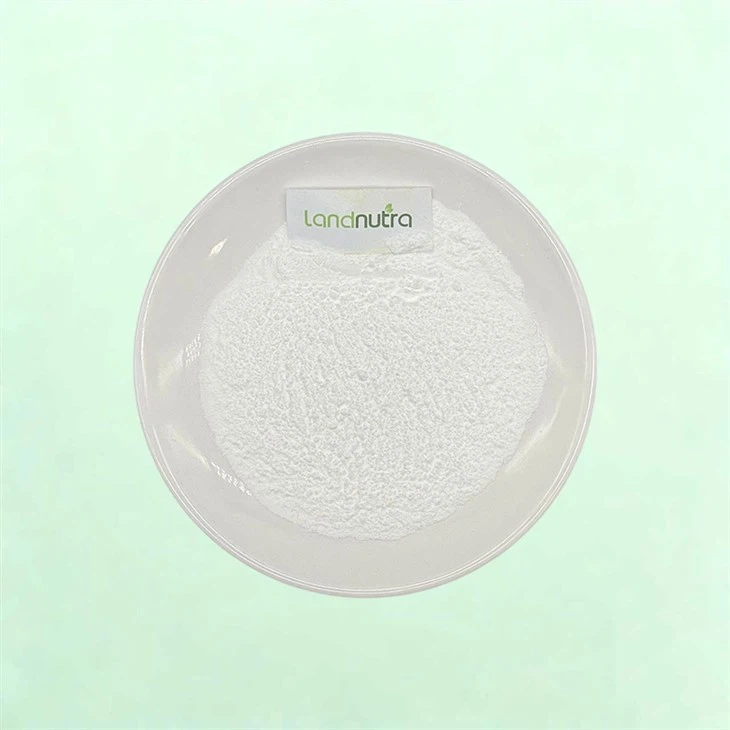
Micronized creatine monohydrate is not a different chemical compound from standard creatine monohydrate. It is the same molecule - identical in purity, hydration state, and bioavailability - subjected to a controlled mechanical reduction in particle size. The term "micronized" refers to a particle size distribution in which the majority of particles are reduced to diameters measured in micrometers (microns), typically ≤75 microns (equivalent to 200 mesh).
Definition of Micronization: For creatine monohydrate, the starting material is standard crystalline creatine (typically >95% through 80 mesh, ≤177 microns). Micronization reduces the particle size distribution such that ≥98% of particles pass through 200 mesh (≤75 microns), with D90 typically 30–50 microns. The resulting powder has a substantially increased specific surface area, altering its behavior in liquid suspension.
Rationale for Micronization: Standard creatine particles settle rapidly due to gravitational sedimentation. Micronized particles, being smaller, settle more slowly. The increased surface area promotes faster wetting and dispersion, resulting in a suspension that remains visually and functionally uniform for longer after mixing.
Important Clarification: Micronization does not render creatine monohydrate fully soluble in water. Creatine monohydrate remains sparingly soluble (approximately 14 g/L at 20°C). At typical serving concentrations, the system remains a suspension of fine particles. Micronized particles simply remain suspended longer before settling.
Micronized vs. Standard Creatine: Comparative Properties
| Property | Standard Creatine (80 mesh) | Micronized Creatine (200 mesh) |
|---|---|---|
| Particle size (max) | ≤177 microns | ≤75 microns |
| D50 (median) | 60–100 microns | 10–25 microns |
| Specific surface area | Low | High (3–5× standard) |
| Settling rate in water | Fast (seconds to minutes) | Slow (minutes to tens of minutes) |
| Mouthfeel | Gritty, settles quickly | Smoother, slower settling |
| Bioavailability | Identical | Identical |
Specification: 99.95% – 100.1% (on dried basis)
Sample: Sample Available
Test method: HPLC / USP method / Titration / Karl Fischer / Laser diffraction particle size analysis
Synonyms: Micronized creatine, micro-creatine, fine-particle creatine monohydrate, rapidly dispersing creatine
MOQ: 1 KG | Package: 1kg/foil bag, 20kgs/carton, 25kgs/drum
Certificate: HACCP, ISO 22000, HALAL, GMP, Kosher (available upon request)
Molecular Formula: C₄H₉N₃O₂·H₂O | CAS: 6020-87-7

Product Characteristics
Appearance
Purity (Dried Basis)
Particle Size
Suspension Behavior
Bulk Density (Loose)
GMP Manufacturing
COA (Certificate of Analysis)
>
Benefits of Micronized Creatine Monohydrate Powder
01Improved Suspension Stability
Micronized particles settle more slowly than standard particles, maintaining uniform concentration throughout the drinking period and reducing "gritty residue" at the bottom of the cup.
02Smoother Mouthfeel
Reduced particle size decreases the sensation of grit, making micronized creatine more palatable when mixed with water or lightly flavored beverages.
03Faster Dispersion
Micronized creatine wets more readily and disperses with minimal stirring, reducing clumping and mixing time.
04Enhanced Power & Strength
Delivers the same performance benefits as standard creatine: increased maximal power output (1–15%), enhanced strength (5–15% improvement in 1RM), and greater work capacity.
05Increased Lean Body Mass
Supplementation combined with resistance training increases fat‑free mass (1–3 kg over 4–12 weeks) via cell swelling and satellite cell activation.
06Accelerated Recovery
Reduces muscle damage markers following high‑intensity exercise, leading to faster recovery of strength and reduced soreness.
Application Fields
Bulk Powder: Sold directly to consumers as a "premium" creatine with improved mixing and smoother texture.
Capsules: Micronized creatine fills more uniformly, reducing capsule weight variation. Sizes 000, 00, 0, 1.
Tablets: Better compressibility, smoother tablet surfaces, reduced capping. Dosages 500–1500 mg.
Chews: Even dispersion in chewable matrix, reduced detectable grittiness. Soft‑chew or gummy formats.
Liquid Creatine: Preferred grade for liquid suspensions; particles remain suspended longer, reducing sedimentation.
RTD Drinks: Pre‑mixed beverages with stabilizers; ambient and refrigerated formulations available.
Creatine Bars: Smoother texture, less perceived "sandiness" than standard creatine.
Powder Blends: Pre‑workout formulas, post‑workout recovery blends, intra‑workout electrolyte mixes, single‑serve stick packs.
Production Process

Product Quality Advantage
≥99.95% Purity – Pharmaceutical-grade.
≥98% through 200 mesh – Controlled, consistent particle size.
Low Impurities – DCD, DHT, creatinine ≤10 ppm.
Low Heavy Metals – Pb, As, Cd <0.5 ppm; Hg <0.1 ppm.
Slower Settling – Improved suspension vs. standard.
cGMP Certified – Full traceability and documentation.


Annual Capacity: 1,500 Tons | 15+ years of creatine manufacturing expertise
Professional ODM/OEM Services
We provide end‑to‑end manufacturing for creatine‑based finished products with micronized creatine as the active ingredient.
① Finished Dosage Forms
Capsules: Sizes 000, 00, 0, 1; fill weights 500–1000 mg; vegetarian/vegan shells; custom bottle/blister packaging.
Tablets: Direct compression or wet granulation; dosages 500–1500 mg; round/oval; debossing; bottle or blister.
Chews: Soft‑chew or gummy; natural/artificial flavors; sugar‑free options.
Liquid Creatine: Micronized creatine suspensions with stabilizers; shots or multi‑dose bottles.
RTD Drinks: Pre‑mixed beverages in bottles, cans, Tetra Pak; ambient or refrigerated.
Creatine Bars: Protein bars, energy bars with smooth texture.
② Powder Blends
Pre‑workout formulas, post‑workout recovery blends, intra‑workout electrolyte mixes, single‑serve stick packs.
③ Additional Services
Custom particle size specification, flavor development, third‑party certification (NSF, Informed Sport), stability studies, regulatory documentation.
Export Certificates

Why choose us
XI'AN LANDNUTRA CO., LTD. – Your Trusted Manufacturer of Antioxidant & Functional Ingredients. Rooted in Quality, Driven by Expertise, Committed to Health and Excellence.
Strong Production Capability: Annual capacity 1,500 tons. 15+ years experience, own facility.
Leading Service: ONE-STOP OEM/ODM from pre-sales to after-sales.
Quality Assurance: CQC-certified enterprise, purity embedded in every process.
Broad Market: Botanical Extracts, Cosmetic Ingredients, Functional Ingredients.
15+ years of creatine manufacturing experience. cGMP‑certified facilities with dedicated micronization equipment. In‑house particle size analysis (laser diffraction). Full OEM/ODM capabilities for capsules, tablets, chews, liquids, RTD drinks, and bars. Batch‑specific COA including particle size distribution. Technical support for liquid creatine stabilization.
FAQ
| Test Item | Specification (Micronized, High-Purity) | Test Result | Conclusion |
|---|---|---|---|
| Appearance | Fine white powder | Conforms | Pass |
| Assay (creatine monohydrate, dried basis) | ≥99.95% | 99.97% | Pass |
| Water Content (KF) | 11.5% – 12.5% | 12.0% | Pass |
| Particle Size (≥98% through 200 mesh) | ≤75 microns | Conforms | Pass |
| D90 (laser diffraction) | ≤60 microns | 48 microns | Pass |
| pH (1% suspension) | 6.5 – 7.5 | 7.1 | Pass |
| Lead (Pb) | ≤0.5 ppm | <0.1 ppm | Pass |
| Arsenic (As) | ≤0.5 ppm | <0.1 ppm | Pass |
| Dicyandiamide (DCD) | ≤10 ppm | 0.8 ppm | Pass |
| Creatinine | ≤50 ppm | 9 ppm | Pass |
| Total Plate Count | ≤1,000 cfu/g | <100 cfu/g | Pass |
| E. Coli / Salmonella | Negative | Negative | Pass |
Hot Tags: micronized creatine monohydrate powder, China micronized creatine monohydrate powder manufacturers, suppliers, functional ingredients, Beta Ecdysterone, Pure Trans resveratrol Powder, Pqq Powder Bulk, Magnesium Oxide Gluconate Lactate, NADH Bulk Powder