

1. Introduction
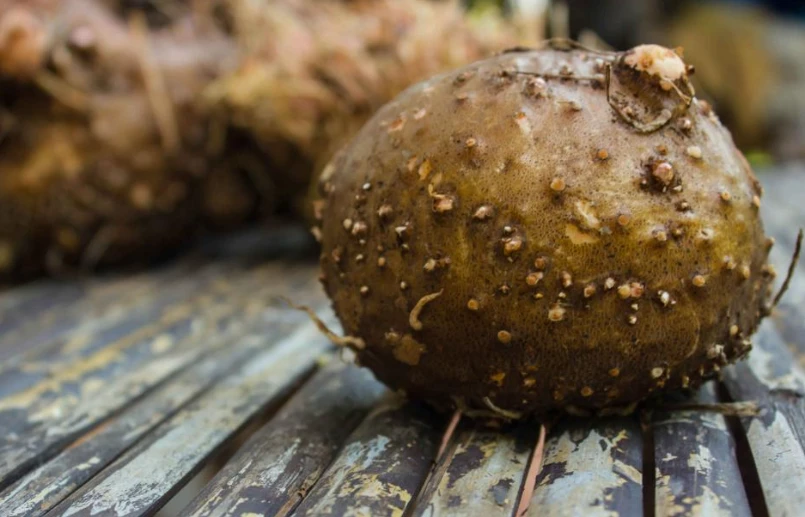
Amorphophallus konjac root extract powder is a water-soluble botanical ingredient derived from the tuber of Amorphophallus konjac, a plant native to East Asia and widely cultivated in China, Japan, and Southeast Asia. Unlike common fiber ingredients that are insoluble and inert, konjac extract is concentrated for its glucomannan content - a high-viscosity soluble polysaccharide with documented effects on satiety, glucose metabolism, and lipid balance.
In cross-border B2B procurement, professional buyers increasingly prioritize high-viscosity konjac glucomannan powder for weight management and metabolic health formulas. They want to avoid the inconsistent viscosity and low glucomannan content found in crude konjac flours. As global demand for natural satiety ingredients and blood sugar support products continues to rise, standardized konjac root extract has become a mainstream bulk supply standard for functional food and supplement applications in 2026.
The global konjac market has expanded steadily, driven by growing consumer interest in high-fiber diets, weight management, and clean-label functional ingredients. The powder form remains one of the highest-share dosage forms across all regions, suitable for capsules, tablets, stick-pack sachets, functional beverages, and food applications such as noodles and jelly products.

2. Konjac Extract vs. Ordinary Konjac Flour: What Buyers Should Know
The konjac market is divided into two primary categories: standardized glucomannan extract and ordinary konjac flour. Understanding the differences is critical for making informed procurement decisions.
Ordinary Konjac Flour. Made by drying and milling the whole konjac tuber. It contains the natural glucomannan along with starch, fiber, protein, and other tuber components. The glucomannan content is relatively low and varies significantly depending on the tuber variety, growing region, and harvest timing. This makes it difficult to formulate products with consistent viscosity or functional claims.
Standardized Konjac Root Extract. Produced through controlled water-based extraction and purification processes. The extraction process concentrates glucomannan to a standardized level - typically 70%–95% - ensuring consistent viscosity and functional performance across batches. High-quality extract is produced without organic solvents and is standardized for both glucomannan content and viscosity, which are the two critical functional parameters.
In international trade contracts and regulatory filing documents, standardized names help avoid confusion. Common professional aliases include konjac glucomannan standardized powder and high-viscosity konjac root extract. Clear naming helps buyers quickly distinguish high-purity standardized extracts from crude konjac flours.
Viscosity testing and glucomannan quantification are the two most commonly used quality methods for konjac extract. The viscosity of a 1% solution at 25°C is the standard industrial measure of functional performance - higher viscosity generally indicates higher glucomannan content and better functional properties. Conventional "konjac powder" products are often tested only for total fiber or total polysaccharides using non-specific methods, which cannot distinguish active glucomannan from inactive starch or other polysaccharides. This leads to falsely inflated glucomannan data - a common quality trap in low-cost bulk procurement.
All legitimate cross-border orders must include batch-specific COA certificates with specific glucomannan content, viscosity data, heavy metal test results, and microbiological data. Premium products use purified water extraction with no organic solvent residue, ensuring clean-label compliance for global markets.
3. Structural Advantages & Scientific Evidence
Extensive nutritional and clinical research has confirmed the unique multi-pathway functional mechanism of konjac glucomannan. This sets it apart from ordinary fiber ingredients and single-function satiety products.
3.1 High Viscosity and Satiety Support
Konjac glucomannan is one of the most viscous soluble polysaccharides found in nature. When dissolved in water, it forms a highly viscous gel that expands significantly in volume. This physical property is the foundation of its satiety effects - the gel occupies space in the stomach, slowing gastric emptying and promoting a feeling of fullness. Clinical studies have shown that konjac glucomannan supplementation before meals can significantly reduce caloric intake and support weight management when combined with a balanced diet.
3.2 Blood Glucose Modulation
Konjac glucomannan slows the release of glucose into the bloodstream by forming a viscous barrier in the small intestine. This delays carbohydrate digestion and absorption, resulting in a more gradual rise in blood glucose levels after meals. Research has shown that konjac glucomannan supplementation can help maintain healthy postprandial glucose levels and support overall glycemic balance. This mechanism is particularly valuable for metabolic health and prediabetes support products.
3.3 Cholesterol and Lipid Balance
Konjac glucomannan binds to bile acids in the digestive tract, promoting their excretion and stimulating the liver to use cholesterol to synthesize new bile acids. This mechanism helps support healthy cholesterol levels. Clinical research has demonstrated that konjac glucomannan can reduce LDL cholesterol and support overall lipid balance as part of a heart-healthy diet.
3.4 Prebiotic and Gut Health Support
Konjac glucomannan is a fermentable fiber that serves as a substrate for beneficial gut bacteria. It promotes the growth of Bifidobacteria and Lactobacilli while supporting short-chain fatty acid production. This prebiotic effect supports overall gut health and contributes to the gut-brain axis balance that is increasingly linked to metabolic and cognitive wellness.
3.5 Safety Profile and Regulatory Status
Konjac glucomannan has a long history of safe use as a food ingredient in East Asia. Modern toxicological studies confirm that konjac extract is well-tolerated at standard dosages. In the United States, konjac glucomannan is recognized as a dietary fiber and is available as a dietary supplement ingredient. In the European Union, konjac glucomannan has an approved health claim for weight management when consumed at 3 g per day in the context of an energy-restricted diet. In China, konjac is approved as a food ingredient and traditional food material.
4. Main B2B Downstream Application Scenarios
| Application Area | Recommended Spec | Key Benefits | Formulation Tips |
|---|---|---|---|
| Weight Management Supplements | 90%–95% glucomannan powder | Promotes satiety, supports appetite control | Take with plenty of water before meals; combine with chromium for glucose support |
| Blood Sugar Support Formulas | 80%–95% glucomannan powder | Slows glucose absorption, supports glycemic balance | Works well with berberine and cinnamon extract for metabolic formulas |
| Cholesterol & Cardiovascular Support | Standardized glucomannan powder | Supports healthy cholesterol levels | Combine with plant sterols and omega-3 for comprehensive lipid support |
| Functional Foods & Beverages | High-dissolution grade powder | Provides soluble fiber fortification | Choose low-viscosity grades for beverages to ensure drinkable texture |
| Gut Health & Prebiotic Blends | Standardized extract powder | Supports beneficial gut bacteria | Blend with inulin and resistant dextrin for comprehensive prebiotic formulas |
| Konjac Food Products | 70%–90% glucomannan powder | Provides gelling and thickening properties | Requires alkaline coagulant (e.g., calcium hydroxide) for gel formation |
Weight management supplements and metabolic health formulas represent the largest downstream markets for konjac root extract powder. With growing consumer awareness of high-fiber diets and natural satiety ingredients, the market for high-purity standardized konjac extract continues to expand steadily. All formulation development must prioritize glucomannan content, viscosity, and batch consistency to ensure both efficacy and consumer satisfaction.
5. Quality Control & Standard Sourcing Checklist
| Parameter | Standard Specification | Test Method | Why It Matters |
|---|---|---|---|
| Appearance | White to off-white fine powder | Visual Inspection | Indicates purification level and batch uniformity |
| Glucomannan Content | 70%–95% (HPLC or enzymatic method) | HPLC / Enzymatic Assay | Core indicator of functional efficacy |
| Viscosity (1% solution, 25°C) | ≥15,000 mPa·s (varies by grade) | Brookfield Viscometer | Directly reflects functional performance in satiety and gelling applications |
| Loss on Drying | ≤10.0% | Gravimetric Method | Prevents moisture absorption and microbial growth |
| Heavy Metals | Pb≤1ppm, As≤1ppm, Cd≤0.5ppm, Hg≤0.1ppm | ICP-MS | Meets global food and supplement safety standards |
| Microbiological Index | TPC≤1000 CFU/g, No Pathogens | USP <61> | Ensures hygienic safety for oral products |
| Stability Test | ≤5% loss at 40°C/3 months | Accelerated Stability Study | Predicts shelf-life performance during storage and processing |
| Solvent Residue | No organic solvent residue | GC | Ensures clean-label compliance for global markets |
Sourcing Tips:
Always verify glucomannan content, not just total fiber or total polysaccharide content.
Request viscosity data - it is the most practical indicator of functional performance.
Choose water-extracted konjac extract over alcohol-extracted versions for clean-label applications.
Confirm that the production process uses no organic solvents for global market compliance.
Select low-viscosity grades for beverage applications and standard grades for capsules and food products.
Store konjac extract powder in sealed containers under cool, dry conditions to prevent moisture absorption.
6. B2B Frequently Asked Questions
Q1: What is the difference between konjac root extract and ordinary konjac flour?
A: Ordinary konjac flour is simply dried and milled konjac tuber, with variable and relatively low glucomannan content. Standardized konjac root extract is produced through controlled water-based extraction and purification, concentrating glucomannan to a consistent, standardized level - typically 70%–95%. Extract offers superior viscosity, batch-to-batch consistency, and the ability to make reliable functional claims. For premium supplements and functional foods, standardized extract is the preferred choice.
Q2: What is the recommended dosage for konjac glucomannan supplements?
A: The European Food Safety Authority has approved a health claim for konjac glucomannan at 3 g per day for weight management in the context of an energy-restricted diet. Clinical studies have used doses ranging from 1 g to 5 g per day, typically taken with plenty of water before meals. Specific dosage should be determined based on the target population and regulatory guidelines. Konjac glucomannan should always be taken with adequate water to prevent choking risk.
Q3: How does konjac glucomannan compare to other soluble fibers?
A: Konjac glucomannan is one of the most viscous soluble fibers found in nature, with viscosity significantly higher than psyllium, oat beta-glucan, or inulin at equivalent concentrations. This high viscosity translates to stronger satiety and glucose modulation effects. However, the high viscosity also means konjac glucomannan requires careful formulation - particularly in beverage applications where low-viscosity grades may be necessary. Konjac glucomannan also has a more neutral taste compared to psyllium, making it easier to incorporate into functional foods and beverages.
Q4: What customized services can reliable manufacturers provide?
A: Established suppliers offer various glucomannan standardization levels (70%–95%), custom viscosity optimization, low-viscosity grades for beverage applications, organic certification, free sample testing, and complete compliance documentation. These services help buyers accelerate new product development and overseas market registration.
7. Conclusion & Contact Information
Amorphophallus konjac root extract powder is a high-value botanical ingredient in the global weight management, metabolic health, and functional food markets. With its documented satiety effects, glucose modulation properties, and prebiotic benefits, standardized konjac glucomannan offers significant advantages over ordinary konjac flour and other soluble fibers. High-purity, standardized formulations have become essential requirements for cross-border premium procurement.
When purchasing in bulk, buyers should focus on glucomannan content, viscosity data, extraction method, and batch consistency. These factors determine both product quality and consumer satisfaction.
Xi'an Land Nutra Co., Ltd. supplies premium konjac root extract powder with various standardization levels. Our products use purified water extraction technology with no organic solvent residue. They feature high glucomannan content, consistent viscosity, and complete documentation support. We provide batch-specific COA certificates, original viscosity and glucomannan test reports, and full compliance documentation. Our products meet global food and supplement grade standards. We support free sample evaluation, formulation technical guidance, long-term stable bulk supply, and customization services.
For sample requests, technical inquiries or bulk order discussions, please contact:
Email: wangjing@landnutra.com
WhatsApp: +86 18092657549
References
1. Keithley, J.K., & Swanson, B. (2005). Glucomannan and obesity: a critical review. Alternative Therapies in Health and Medicine, 11(6), 30-34.
2. Vuksan, V., Jenkins, D.J., Spadafora, P., et al. (1999). Konjac-mannan (glucomannan) improves glycemia and other associated risk factors for coronary heart disease in type 2 diabetes. Diabetes Care, 22(6), 913-919.
3. EFSA Panel on Dietetic Products, Nutrition and Allergies. (2010). Scientific Opinion on the substantiation of health claims related to konjac mannan (glucomannan) and reduction of body weight. EFSA Journal, 8(10), 1798.
4. Chen, H.L., Cheng, H.C., Liu, Y.J., et al. (2006). Konjac glucomannan attenuates hepatic steatosis and improves insulin resistance in high-fat diet-induced obese mice. Journal of Agricultural and Food Chemistry, 54(13), 4661-4666.
5. U.S. Food and Drug Administration. (2026). Substances Added to Food – Konjac glucomannan.
6. Research and Markets. (2026). Konjac Market – Global Industry Analysis, Size, Share, Growth, Trends, and Forecast 2026-2032.
7. Landnutra. (2026). Amorphophallus Konjac Root Extract Powder – Product Specification.
8. Chinese Pharmacopoeia Commission. (2025). Pharmacopoeia of the People's Republic of China – Amorphophallus konjac.