

1. Introduction
Nicotinamide riboside (NR) powder has become one of the most discussed ingredients in the longevity supplement space. It appears in anti-aging capsules, cellular energy blends, cognitive support formulas, and even functional beverages. Yet for all the attention it receives, there is a persistent gap between how NR is marketed and how it actually behaves in a production environment.
That gap is where sourcing mistakes happen. Buyers who source nicotinamide riboside powder for NAD+ support and healthy aging formulations often compare suppliers on a single purity number, then discover that batch consistency, salt form, moisture sensitivity, and documentation quality determine whether the ingredient works in their product. This article focuses on the practical, procurement-level details that separate a reliable NR supply from a problematic one.
The global NR market has continued to expand, supported by sustained consumer interest in NAD+ biology and cellular health. The powder form remains the preferred delivery format for capsule, tablet, and sachet applications because it allows precise dosing and flexible blending. But the powder form also introduces handling requirements that liquid or pre-formulated ingredients avoid.

2. Why NR Sourcing Is Not a Purity Number Contest
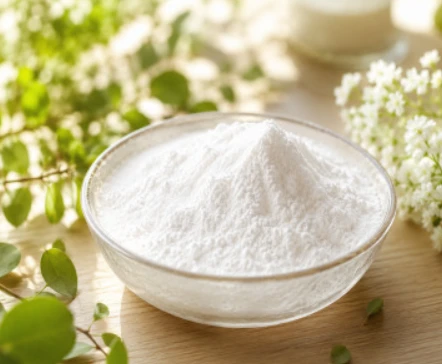
Most NR specification sheets lead with a purity figure, usually 98% or higher by HPLC. That number matters, but it tells you very little about how the material will perform in production.
Salt form is the first variable. NR is commercially available as nicotinamide riboside chloride and nicotinamide riboside malate. These are not interchangeable. NR chloride is the more established form, with a longer regulatory track record and a large body of published stability data. It is highly water-soluble, which makes it suitable for capsules and beverages but also means it is hygroscopic. NR malate was developed in part to reduce hygroscopicity, and its malate component participates in the TCA cycle, which some formulators view as a secondary metabolic benefit. The right choice depends on the dosage form, the target market's regulatory acceptance, and the supplier's actual production capability for each form.
Moisture behavior is the second variable. NR chloride absorbs water readily. In a humid production environment, this can cause clumping, weight variation in capsules, and accelerated degradation. Buyers should request the loss on drying specification and, more importantly, ask how the supplier controls moisture during milling, blending, and packaging. A supplier that provides only a final product COA without describing in-process moisture control is leaving a key risk unaddressed.
Degradation profile is the third variable. NR can degrade into nicotinamide and other related substances under adverse conditions. The COA should list related substances with actual measured values, not a generic compliance statement. A low total impurity figure is more meaningful than a high headline purity figure, because it reflects how well the supplier controls the entire production process.
The fourth variable is documentation depth. A complete NR COA includes specific HPLC purity, salt form identification, loss on drying, related substances, heavy metals, microbiological data, and residual solvent information. Suppliers who provide only a one-page summary sheet are usually not the ones with robust quality systems.
3. The Stability Question Buyers Underestimate
NR is often described as "stable" in marketing materials, but stability is relative. The more accurate statement is that NR is stable when moisture and temperature are controlled, and it degrades when they are not.
Powder form is generally more stable than liquid form, which is one reason NR powder dominates the bulk market. Within powder form, several factors influence shelf life. Particle size affects surface area and therefore moisture uptake. Packaging format determines how much moisture and oxygen the material is exposed to during shipping and storage. Aluminum foil bags with double PE liners are standard for premium NR, and some suppliers use nitrogen flushing for additional protection.
Temperature matters as well. Accelerated stability testing at 40°C for three months is a common benchmark. A supplier whose NR shows less than 2% degradation under these conditions is likely to deliver a product with a practical shelf life of 24 months or more under recommended storage. A supplier who cannot provide accelerated stability data is asking the buyer to accept an unknown risk.
There is also a formulation-side consideration. NR is often combined with resveratrol, pterostilbene, CoQ10, or other longevity ingredients. Some of these combinations are synergistic from a marketing perspective but challenging from a stability perspective, because different ingredients have different moisture and pH sensitivities. Buyers developing combination products should request compatibility data or run their own accelerated testing before committing to a formulation.
4. Application-Specific Sourcing Considerations
| Application | Preferred NR Form | Key Sourcing Consideration | Formulation Guidance |
|---|---|---|---|
| Anti-aging capsules | NR chloride, standard grade | Moisture control during encapsulation; verify flowability | Use desiccant packaging; avoid high-humidity production environments |
| Longevity combination formulas | NR chloride or malate, high purity | Compatibility with resveratrol, pterostilbene, CoQ10 | Run accelerated compatibility testing before finalizing the blend |
| Stick-pack sachets | NR chloride, fine-milled grade | Particle size uniformity for blend consistency | Match particle size to other sachet ingredients to prevent segregation |
| Functional beverages and RTD formats | NR chloride, high-dissolution grade | Dissolution speed and solution clarity | Confirm taste profile and pH compatibility before scale-up |
| Premium anti-aging skincare | Cosmetic-grade purified NR | Purity and heavy metal profile for topical use | Consider encapsulation for aqueous serum formats |
Capsules and combination longevity formulas remain the largest application categories for NR powder. Beverage applications are growing, but they place higher demands on dissolution speed and taste neutrality, which narrows the field of suitable suppliers. Skincare applications are smaller in volume but often command higher margins, and they require cosmetic-grade documentation rather than food-grade documentation alone.
A practical point that experienced buyers learn: the NR grade that works best in a capsule may not be the same grade that works best in a stick pack or beverage. Particle size, flowability, and dissolution profile all vary by application. Matching the grade to the dosage form before negotiating price avoids costly reformulation later.
5. Quality Control and Documentation Checklist
| Parameter | Typical Specification | Test Method | Why It Matters |
|---|---|---|---|
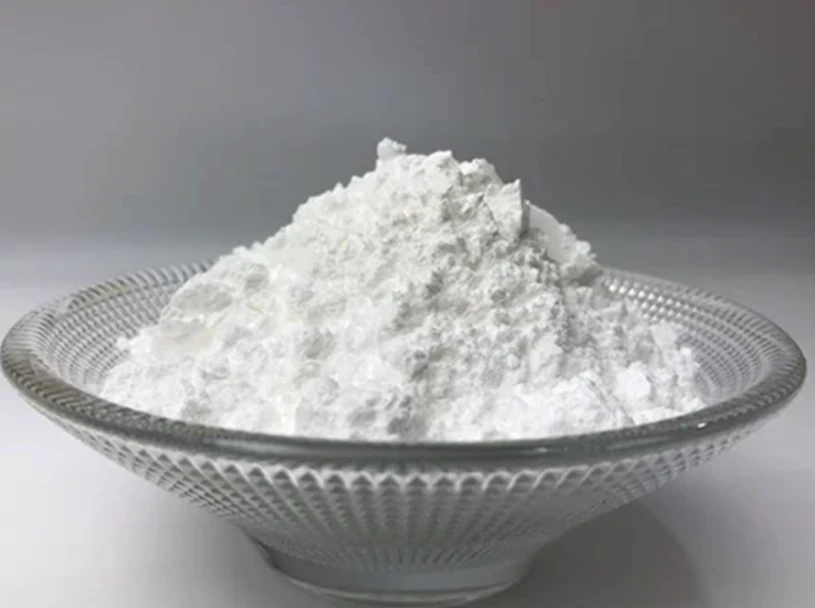
| Appearance | White to off-white crystalline powder | Visual | Discoloration indicates oxidation or impurity issues |
| Assay | ≥ 98.0% (HPLC, dry basis) | HPLC | Core indicator, but must be read alongside related substances |
| Salt form identification | Chloride or malate, as declared | Ion chromatography or NMR | Confirms the material matches the intended formulation |
| Related substances | ≤ 1.0% total | HPLC | Reflects process control and predicts stability |
| Loss on drying | ≤ 1.0% | Gravimetric | High moisture accelerates degradation and causes clumping |
| Heavy metals | Pb ≤ 1 ppm, As ≤ 1 ppm, Cd ≤ 1 ppm, Hg ≤ 0.3 ppm | ICP-MS | Required for global market compliance |
| Microbiological index | TPC ≤ 1000 CFU/g, no pathogens | USP <61> | Mandatory for oral applications |
| Residual solvents | Meets ICH Q3C limits | GC | Confirms production process cleanliness |
| Accelerated stability | ≤ 2% loss at 40°C / 3 months | HPLC after storage | Predicts real shelf life and shipping tolerance |
Practical sourcing notes:
Read the related substances section before the assay section. A 99% pure material with 0.9% total impurities is not necessarily better than a 98.5% material with 0.3% impurities.
Confirm the salt form in writing. Chloride and malate have different handling requirements and regulatory status in different markets.
Request accelerated stability data for the specific grade and packaging format you intend to purchase.
Ask how moisture is controlled during production, not just what the final loss on drying value is.
Verify that the supplier can provide batch-specific documentation, not just a generic product specification.
6. Questions Buyers Ask Before Committing to a Bulk Order
Q1: Should I choose NR chloride or NR malate?
A: It depends on your dosage form and target market. NR chloride has a longer regulatory track record, broader market acceptance, and extensive published stability data. It is highly water-soluble, which suits capsules and beverages, but it is also hygroscopic and requires careful moisture control. NR malate offers lower hygroscopicity and includes malate as a TCA cycle intermediate. For capsules and combination formulas where moisture control is manageable, NR chloride is the default choice. For applications where hygroscopicity is a concern, or where malate's metabolic angle fits the product story, NR malate is worth evaluating. Confirm your supplier can actually produce the form they are quoting.
Q2: How stable is NR powder in real storage conditions?
A: NR powder is stable when moisture, temperature, and oxygen are controlled. Accelerated testing at 40°C for three months is a reasonable benchmark, and a well-produced grade should show less than 2% degradation under these conditions. Practical shelf life under recommended storage is typically 24 months. The biggest risks are moisture uptake during production and exposure to high humidity during shipping. Moisture-proof packaging and controlled warehouse conditions are essential.
Q3: What should I look for in an NR COA?
A: A complete COA should include specific HPLC assay value, salt form identification, related substances with actual measured values, loss on drying, heavy metals with numerical results, microbiological data, residual solvent information, and accelerated stability data. Documents that state only "meets specification" without numerical values are a warning sign. Batch-specific documentation is more valuable than a generic product sheet.
Q4: Can NR be combined with resveratrol, pterostilbene, or CoQ10 in one formula?
A: These combinations are popular in the longevity supplement space and are technically feasible, but they require compatibility testing. Different ingredients have different moisture sensitivities and optimal pH ranges. Some combinations may accelerate degradation of one or more components. Buyers should request compatibility data from the supplier or run their own accelerated testing before finalizing a combination formula. This step is often skipped and later becomes a costly reformulation.
7. Conclusion & Contact Information
Nicotinamide riboside powder is a mature ingredient with growing market demand, but sourcing it well requires attention to details that a purity number alone cannot capture. Salt form, moisture behavior, related substances, documentation depth, and application-specific grade selection all influence whether NR performs as expected in a finished product. Buyers who evaluate suppliers on these dimensions rather than price alone are the ones who avoid reformulation and quality problems down the line.
For bulk procurement, request batch-specific COAs, accelerated stability data, and written confirmation of salt form and packaging specifications. These documents are the foundation of a reliable NR supply relationship.
Xi'an Land Nutra Co., Ltd. supplies high-purity nicotinamide riboside powder in both chloride and malate forms, with grades optimized for capsules, sachets, beverages, and cosmetic applications. Our products feature controlled moisture content, low related substances, and consistent batch quality. We provide batch-specific COA certificates, original HPLC test reports, accelerated stability data, and full regulatory documentation for global markets. We support free sample evaluation, formulation technical guidance, long-term stable bulk supply, and customization services.
For sample requests, technical inquiries or bulk order discussions, please contact:
Email: wangjing@landnutra.com
WhatsApp: +86 18092657549
References
1. Trammell, S.A., Schmidt, M.S., Weidemann, B.J., et al. (2016). Nicotinamide riboside is uniquely and orally bioavailable in mice and humans. Nature Communications, 7, 12948.
2. Martens, C.R., Denman, B.A., Mazzo, M.R., et al. (2018). Chronic nicotinamide riboside supplementation is well-tolerated and elevates NAD+ in healthy middle-aged and older adults. Nature Communications, 9, 1286.
3. Damgaard, M.V., et al. (2023). What is really known about the effects of nicotinamide riboside supplementation in humans. Science Advances, 9(29), eadi4862.
4. Conze, D., Brenner, C., & Kruger, C.L. (2019). Safety and metabolism of long-term administration of NIAGEN (nicotinamide riboside chloride) in a randomized, double-blind, placebo-controlled clinical trial of healthy overweight adults. Scientific Reports, 9, 9772.
5. Airhart, S.E., Shireman, L.M., Risler, L.J., et al. (2017). An open-label, non-randomized study of the pharmacokinetics of the nutritional supplement nicotinamide riboside (NR) and its effects on blood NAD+ levels in healthy volunteers. PLoS ONE, 12(12), e0186459.
6. U.S. Food and Drug Administration. (2026). Nicotinamide Riboside Chloride - Substance Registration System.
7. Research and Markets. (2026). Nicotinamide Riboside Market - Global Industry Analysis, Size, Share, Growth, Trends, and Forecast 2026-2032.
8. Landnutra. (2026). Nicotinamide Riboside Powder - Product Specification.